


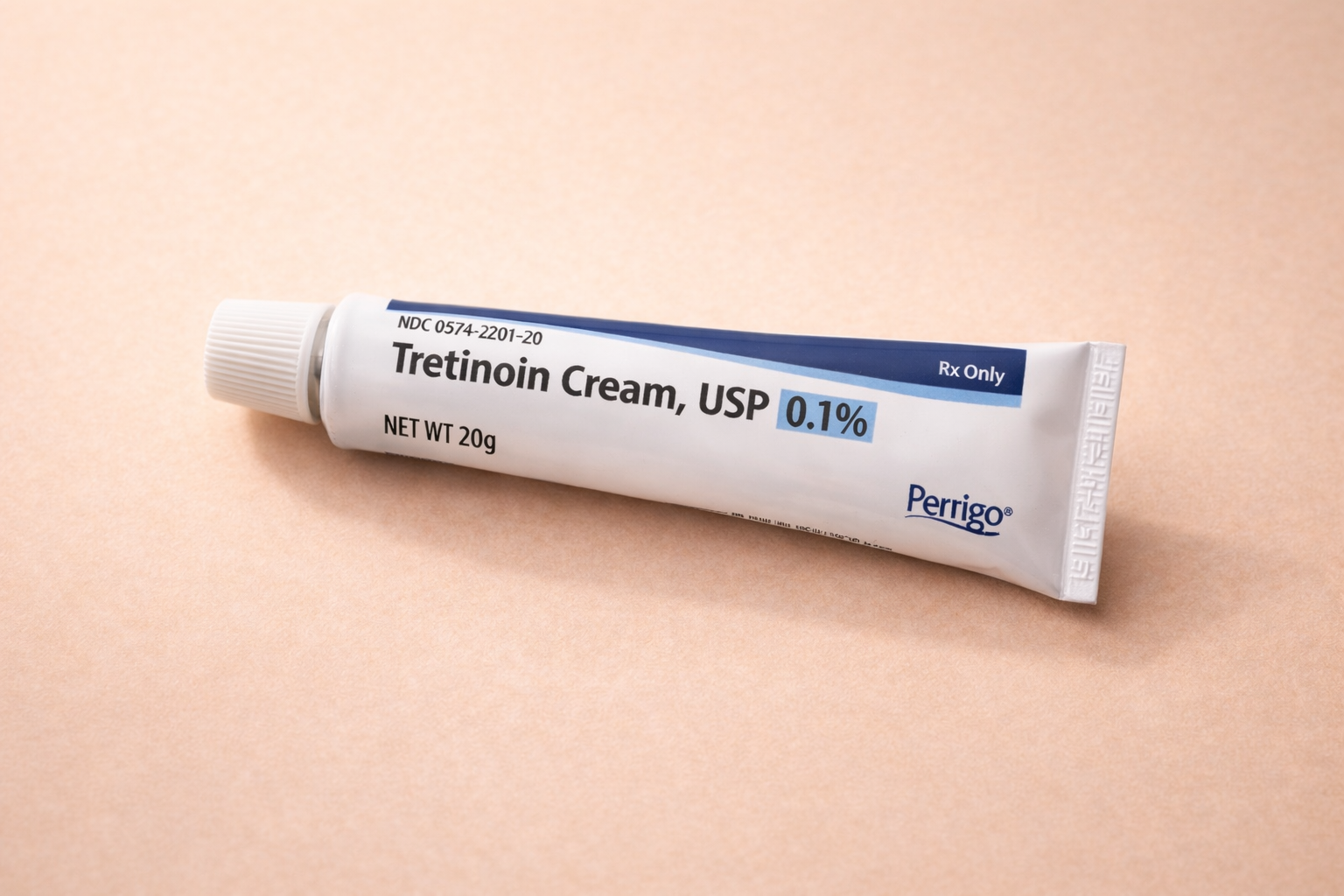
Retinol: The One Ingredient Everyone Talks About (And Most People Use Wrong)
Retinol works. We know this. But most people either quit too soon or push too hard. Here's how to actually use it without wrecking your skin.
Introduction
Look, retinol has a reputation. It's the ingredient everyone swears by once they figure it out, and the one everyone rage-quits at least once before getting there.
The hype is real — decades of research back it up. It smooths texture, fades dark spots, clears acne, reduces fine lines. But it's also genuinely tricky to use, especially if you go in thinking it'll work like your average serum.
So here's what you actually need to know if you want results without the flaking, redness, and "why does my face hate me" phase that sends most people back to their old routine.
What Retinol Actually
Retinol is a vitamin A derivative. When you put it on your skin, it converts into retinoic acid — the active form that tells your cells to speed up turnover. Basically, it's teaching your skin to act younger.
This is why it works for so many things: clogged pores, dullness, fine lines, uneven tone. Faster cell turnover means fresher skin rising to the surface more quickly.
Prescription retinoids (like tretinoin) are stronger because they skip the conversion step — they're already in the active form. Over-the-counter retinol has to convert first, which makes it gentler but also slower.
Why It's So Easy To Mess Up
Here's the thing: retinol forces your skin to work faster than it's used to. That can mean flaking, dryness, redness, and sensitivity while your skin adjusts.
This adjustment period — often called "retinization" — usually lasts a few weeks. Some people sail through it. Others peel like a snake and give up on day five.
The most common mistakes? Starting with too high a concentration. Using it every night from day one. Not moisturizing enough. Mixing it with other actives before your skin is ready. Quitting the second things get uncomfortable.
How To Actually Introduce It
Start low and slow. Like, slower than you think. A pea-sized amount, once or twice a week, is plenty to begin with. If your skin handles that fine for a couple weeks, bump it up to every third night. Then every other. Then nightly if your skin tolerates it.
Always apply at night (retinol breaks down in sunlight), and always — seriously, always — wear sunscreen the next day. Retinol makes your skin more vulnerable to UV damage.
If your skin is on the sensitive side, try the "retinol sandwich" method: moisturizer first, then retinol, then more moisturizer. It buffers the intensity without killing effectiveness.
And if your barrier is already compromised (tight, red, stinging when you wash your face), don't start retinol yet. Fix that first. Retinol on a damaged barrier is like running a marathon on a sprained ankle.
Myths That Need To Die
"You have to peel to see results." Nope. Some people do, some don't. Peeling isn't the goal — cell turnover is happening whether or not you're shedding visible flakes.
"Higher percentage = better." Also no. A 0.25% retinol used consistently will outperform a 1% retinol you can only tolerate once a week. Consistency beats strength every time.
"If I get irritated, I have to stop forever." Not true. It just means you went too fast. Scale back, repair your barrier, and reintroduce more slowly. Plenty of people who initially react badly end up using retinol long-term once they figure out their skin's pace.
The Real Timeline
Results take time. Not "a few days" time. Real time — usually 8 to 12 weeks before you see noticeable improvement.
This is where a lot of people bail. They expect immediate gratification, get annoyed when their skin looks worse before it looks better, and quit before the good stuff kicks in.
If you're three weeks in and not seeing improvement yet, that's completely normal. Stick with it. The payoff is worth the patience.
Bottom Line
Retinol works, but only if you respect what it's doing to your skin. It's not about toughing it out or using the strongest version you can find. It's about giving your skin time to adapt and supporting it while it does.
If you want smoother texture, clearer pores, faded hyperpigmentation, or fewer fine lines, retinol is one of the best tools available. Just don't expect it to happen overnight, and don't push your skin harder than it can handle.
Smart retinol use isn't about being tough. It's about being patient.
More to read

Skin Cycling: The Routine Strategy That Actually Makes Sense
Skin cycling is a structured way to use actives without wrecking your barrier. Here's how it works and why it's better than using everything every night.
Vitamin C: The Glow Ingredient That's Way More Complicated Than It Should Be
Vitamin C is one of the most hyped ingredients in skincare — and also one of the most frustrating. Here's why your serum keeps turning brown and what to do about it.
Alcohol in Skincare: Why Everyone Freaks Out (And Why They're Only Half Right)
Not all alcohols are bad. Some are genuinely helpful. But the skincare world treats them all the same, and that's where the confusion starts.
Niacinamide: The Ingredient That's In Everything (And Why That Might Be a Problem)
Niacinamide is everywhere. Your moisturizer, your serum, probably your cleanser too. But more isn't always better — and your skin might be trying to tell you that.