


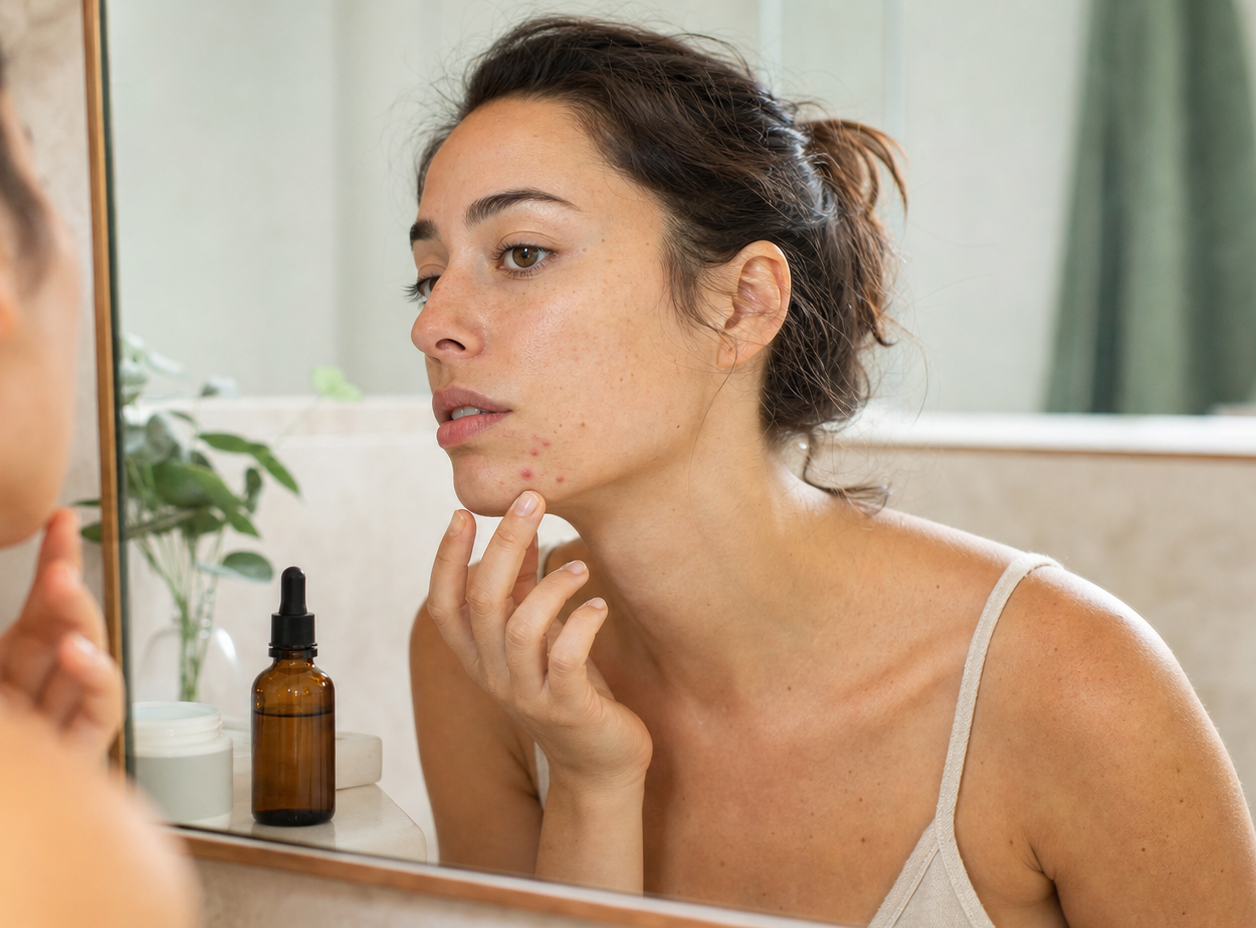
Purging vs. Breaking Out: How To Tell The Difference
Your skin is breaking out after starting a new product. Is it purging or is the product making things worse? Here's how to tell.
Introduction
You start a new active — retinol, an exfoliating acid, something promising. A week later, your face is covered in breakouts. Is this purging (good, temporary, worth pushing through) or is the product just making your skin worse?
Here's how to tell the difference.
What Purging Actually Is
Purging happens when a product speeds up your skin's cell turnover. Clogs that were forming under the surface get pushed out faster than they normally would. So you see a temporary increase in breakouts — but they're not new breakouts, they're existing clogs coming to the surface sooner.
Only certain ingredients cause purging: retinoids, AHAs, BHAs, benzoyl peroxide, and other exfoliating or cell-turnover-boosting actives. If your new moisturizer or cleanser is causing breakouts, that's not purging — that's just a bad reaction.
Signs It's Purging (And You Should Stick With It)
The breakouts are in areas where you normally break out. If you usually get pimples on your chin and forehead, and that's where the new breakouts are appearing, it's probably purging.
The breakouts are clearing faster than usual. Purging pimples come up quickly and heal quickly because your cell turnover is accelerated.
It started within the first few weeks of using the product. Purging typically happens in the first 2-4 weeks.
Your skin is improving overall despite the breakouts. If your texture is smoother, your pores look smaller, or your old acne scars are fading while you're getting these temporary breakouts, that's a good sign.
Signs It's NOT Purging (And You Should Stop)
You're breaking out in areas where you never break out. If you never get pimples on your cheeks and suddenly you're covered in them, that's not purging — the product is irritating your skin.
The breakouts aren't healing. If pimples are sticking around for weeks or getting worse, that's not purging.
It's been more than 6-8 weeks and your skin is still getting worse. Purging should resolve within about 6 weeks. If you're two months in and things are still bad, the product isn't working for you.
You're experiencing other symptoms like redness, itching, stinging, or rashes. That's irritation, not purging.
The product doesn't contain an active that causes purging. If you're breaking out from a new moisturizer, toner, or cleanser that doesn't have retinoids or exfoliating acids, it's not purging — something in the formula is clogging your pores or irritating you.
How Long Purging Should Last
Purging typically lasts 4-6 weeks. Your skin's cell turnover cycle is about 28 days, so you need at least one full cycle (sometimes two) for all the underlying clogs to surface and clear.
If you're still purging after 8 weeks, something else is going on. Either the product is too strong for your skin, you're using it too frequently, or it's not actually purging — it's just breaking you out.
How To Minimize Purging
Start slow. Use retinol or exfoliating acids once or twice a week at first, then gradually increase frequency as your skin adjusts. Don't jump straight into daily use.
Buffer with moisturizer. Apply your active over moisturizer instead of on bare skin to reduce irritation.
Don't layer multiple purging-inducing products at once. If you're starting retinol, don't also start an AHA at the same time. Give your skin a chance to adjust to one thing before adding another.
When To Push Through vs. When To Quit
If it's true purging — breakouts in your usual areas, clearing quickly, improving overall texture — push through. Give it the full 6-8 weeks.
If your skin is getting progressively worse, you're breaking out in new areas, or you're experiencing irritation beyond just breakouts, stop using the product. It's not working for your skin.
Bottom Line
Purging is real, but it's not an excuse for endless breakouts. If your skin is getting worse after 6-8 weeks, or if you're experiencing irritation beyond temporary breakouts, the product isn't right for you.
Trust your skin. If something feels wrong, it probably is.
More to read

Acne Products That Actually Make Your Breakouts Worse
Sometimes the products you're using to clear your acne are the exact reason it's getting worse. Here's what to watch out for.
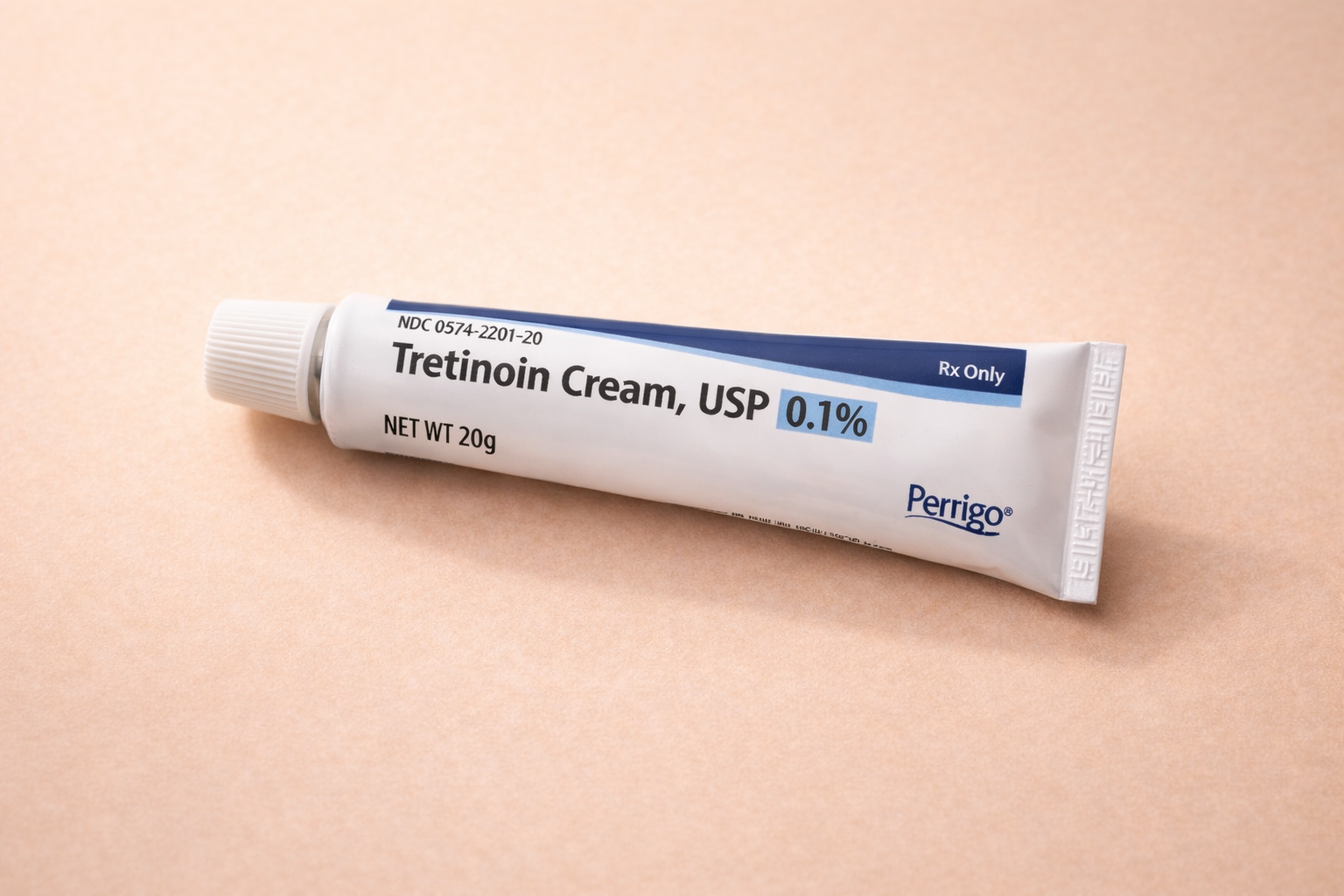
Retinol: The One Ingredient Everyone Talks About (And Most People Use Wrong)
Retinol works. We know this. But most people either quit too soon or push too hard. Here's how to actually use it without wrecking your skin.

When Skincare Isn't Enough: Signs You Need To See a Dermatologist
Sometimes over-the-counter products aren't enough. Here's when it's time to stop experimenting and get professional help.

Skin Cycling: The Routine Strategy That Actually Makes Sense
Skin cycling is a structured way to use actives without wrecking your barrier. Here's how it works and why it's better than using everything every night.