



Morning vs. Night Skincare: Why Your Routine Shouldn't Be The Same Twice a Day
Our skin has different jobs during the day and at night. Your routine should reflect that — or you're missing out on what certain ingredients can actually do.
Introduction
A lot of people use the same products morning and night without thinking about it. Cleanser, serum, moisturizer — same order, same stuff, twice a day.
But your skin has different needs depending on the time of day. In the morning, you're prepping and protecting. At night, you're repairing and renewing. The products that work best for one don't always make sense for the other.
Morning: Protect and Prep
Your morning routine is about getting your skin ready for the day. You're about to expose it to UV rays, pollution, makeup, and whatever else the world throws at it. Your job is to protect.
Start with a gentle cleanser — you don't need anything heavy in the morning. You're just removing sweat and any products from the night before.
Then layer in antioxidants. Vitamin C is a popular morning choice because it neutralizes free radicals from UV and pollution. Niacinamide works well here too — calming, anti-inflammatory, plays nicely with sunscreen.
Follow with a lightweight moisturizer. You don't need anything occlusive or super rich in the morning unless your skin is extremely dry. Save the heavy creams for nighttime.
And finish with sunscreen. This is non-negotiable. SPF 30 minimum, every single day. It's the most effective anti-aging product you'll use, and it protects against UV damage even when you're mostly indoors.
Night: Repair and Renew
At night, your skin shifts into repair mode. Cell turnover increases. Your barrier works to rebuild itself. This is when you want to use your heavier-hitting actives and richer moisturizers.
If you wore makeup or sunscreen during the day, double cleanse. Start with an oil-based cleanser or balm to break down the SPF and makeup, then follow with your regular face wash. This ensures you're actually getting everything off.
This is when you use retinol, if you're using it. Or exfoliating acids like AHAs and BHAs. These ingredients increase cell turnover and can make your skin more sun-sensitive, so nighttime is ideal.
Layer on hydrating serums — hyaluronic acid works great here. Then follow with a richer moisturizer than what you'd use in the morning. Ingredients like ceramides, peptides, and fatty acids support barrier repair while you sleep.
If your skin is very dry, you can add a facial oil or an occlusive layer to seal everything in. You're not going anywhere — you can afford to be a little greasy.
What To Use When
Some ingredients work better at specific times of day.
Morning: vitamin C, niacinamide, hyaluronic acid, lightweight moisturizer, sunscreen.
Night: retinol, AHAs/BHAs, peptides, ceramides, richer moisturizers, facial oils.
Don't use retinol or strong exfoliants in the morning — they make your skin more vulnerable to sun damage. And don't bother with sunscreen at night — it's not doing anything while you sleep.
Layering Basics
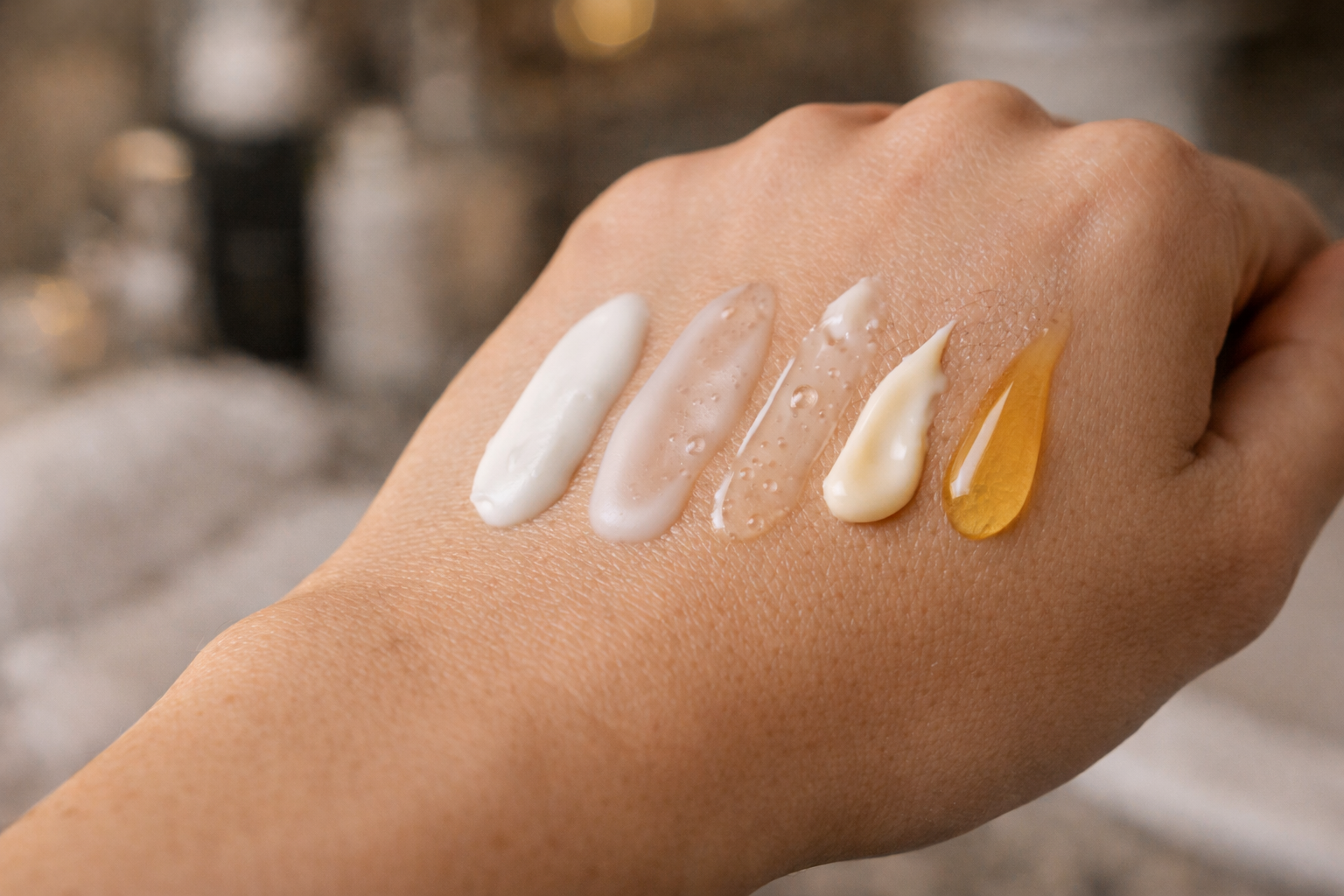
Thinnest to thickest. Water-based products before oil-based. Serums before creams.
Give each layer a minute to absorb before adding the next one, especially if you're using potent actives. Piling everything on at once doesn't make it work faster — it just increases the chance of irritation or pilling.
And don't overdo the actives. If you're using vitamin C in the morning and retinol at night, that's already a solid routine. You don't need to add five more serums on top.
Do You Really Need Two Routines?
If you're just starting out, you can keep it simple — cleanser, moisturizer, and sunscreen in the morning; cleanser and moisturizer at night. That's totally fine.
But as you get more comfortable and start adding actives, splitting your routine by time of day lets you get more out of your products. Morning is for protection. Night is for repair. Using the right ingredients at the right time makes a difference.
Final Thoughts
Your morning and night routines don't have to be complicated, but they shouldn't be identical. Your skin has different needs depending on the time of day, and your routine should reflect that.
Protect in the morning. Repair at night. Keep it simple, stay consistent, and don't overthink it.
More to read

Skin Cycling: The Routine Strategy That Actually Makes Sense
Skin cycling is a structured way to use actives without wrecking your barrier. Here's how it works and why it's better than using everything every night.

Skincare Basics: The Only Three Things You Actually Need
Everyone wants to sell you a 12-step routine. But good skin starts with three things: cleanser, moisturizer, sunscreen. Everything else is optional.

Hyaluronic Acid: The Ingredient That’s Only as Good as Your Routine
Hyaluronic acid is in everything, and everyone swears by it. But if you're using it on dry skin in a dry climate without sealing it in, it might actually be making things worse.
Skincare Order of Application
You can have all the right products and still mess it up if you're applying them in the wrong order. Here's how to layer your skincare so it actually works.