


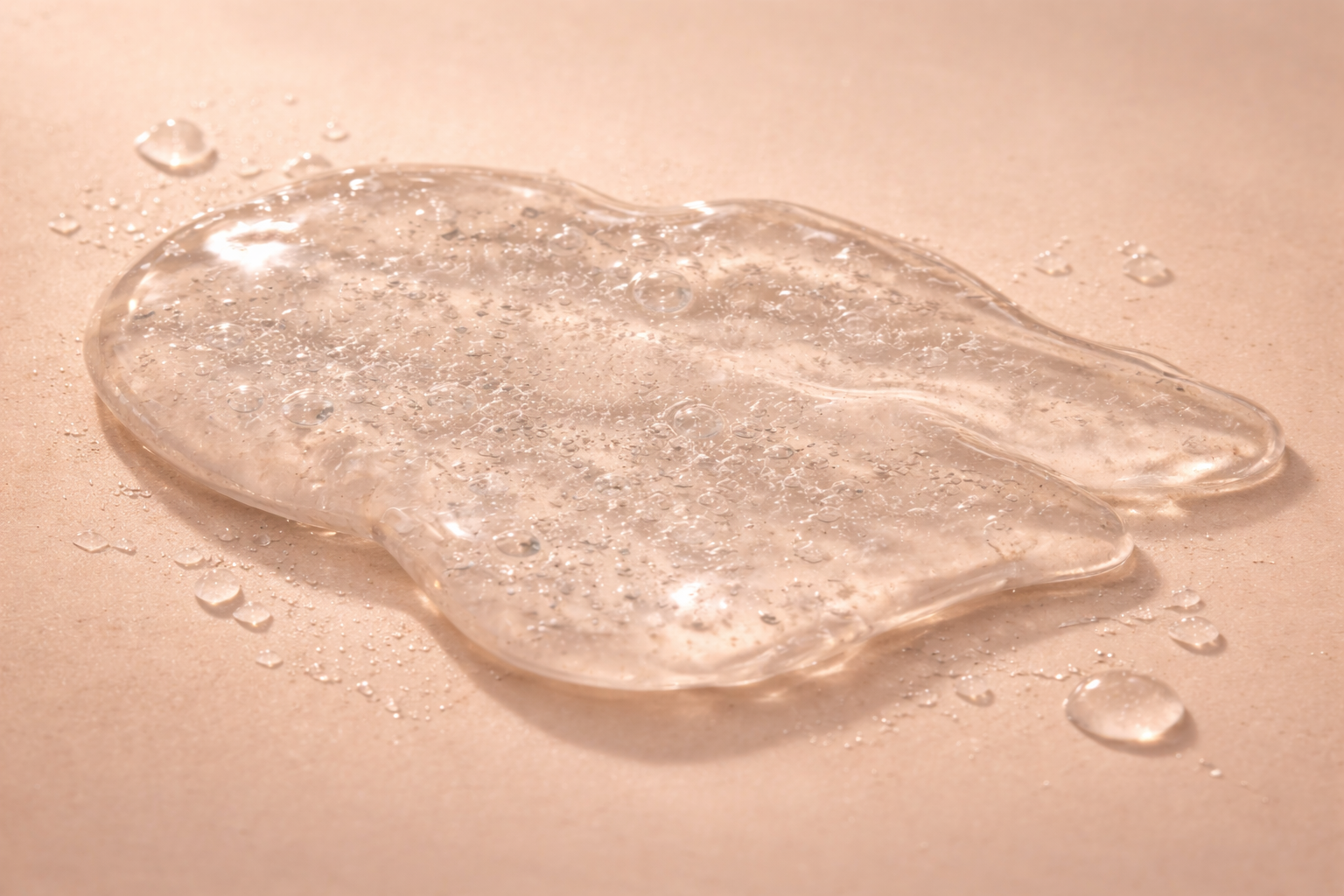
Hyaluronic Acid: The Ingredient That’s Only as Good as Your Routine
Hyaluronic acid is in everything, and everyone swears by it. But if you're using it on dry skin in a dry climate without sealing it in, it might actually be making things worse.
Introduction
Hyaluronic acid is one of those ingredients that shows up in literally everything — serums, moisturizers, sheet masks, eye creams. It's marketed as the ultimate hydration booster, the thing that'll give you plump, dewy skin.
And when used correctly, it absolutely can. But here's the thing nobody mentions: hyaluronic acid isn't actually hydrating on its own. If you're using it wrong, it can leave your skin feeling tighter and drier than before.
What Exactly is Hyaluronic Acid?
Despite the name, hyaluronic acid isn't an exfoliating acid like glycolic or salicylic. It's a humectant — a molecule that binds to water and holds it. Your body produces it naturally. It's in your skin, your joints, your eyes, keeping everything lubricated and plump.
The claim you always hear is that it can hold up to 1,000 times its weight in water. That's true. The problem is where that water comes from.
The Humidity Problem
Hyaluronic acid pulls water from wherever it can find it. If the air is humid and you've applied it to damp skin, great — it'll draw moisture from the environment and hold it on your face.
But if the air is dry — like in winter, in air-conditioned offices, or in arid climates — and you're applying it to dry skin, it'll pull water from inside your skin instead. Which is the opposite of what you want.
This is why some people love hyaluronic acid and others feel like it makes their skin worse. It's not the ingredient itself — it's how and where you're using it.
How To Use It
Apply hyaluronic acid to damp skin. Not soaking wet, but not bone dry either. Right after washing your face, while your skin still has some moisture on it, is ideal.
Then — and this is critical — seal it in with a moisturizer or an occlusive layer. If you just pat on hyaluronic acid and leave it, the water it's holding will evaporate, taking some of your skin's moisture with it.
You don't need a lot, either. A few drops or a thin layer is plenty. More doesn't mean better hydration — it just means more product sitting on your face doing nothing.
Molecular Weight Matters (Kind Of)
You'll sometimes see products marketed with "low molecular weight" or "high molecular weight" hyaluronic acid. High molecular weight HA sits on the surface and provides a temporary plumping effect. Low molecular weight HA can penetrate deeper into your skin.
Most good formulas include both. You don't need to overthink this part — just know that a mix of sizes tends to work better than one or the other alone.
When To Skip It
If your skin barrier is already compromised — red, stinging, peeling — hyaluronic acid isn't your priority. Focus on repairing your barrier first with ceramides, fatty acids, and gentle occlusives.
If you live in a super dry climate and you're only using a hyaluronic acid serum with no moisturizer on top, it's probably not doing you any favors. Either layer it properly or skip it and use a richer moisturizer instead.
Final Thoughts
Hyaluronic acid is a great ingredient when used correctly — but it's not a stand-alone hydrator. It needs moisture to pull from and something to seal it in. Think of it as the middleman, not the solution.
If you're applying it to damp skin, following it with a good moisturizer, and you live somewhere with decent humidity, you'll probably love it. If you're slapping it on dry skin in a desert climate and wondering why your face feels tight, now you know why.
Skincare is chemistry, not magic. And hyaluronic acid only works when the conditions are right.
More to read
Skincare Basics: The Only Three Things You Actually Need
Everyone wants to sell you a 12-step routine. But good skin starts with three things: cleanser, moisturizer, sunscreen. Everything else is optional.
Niacinamide: The Ingredient That's In Everything (And Why That Might Be a Problem)
Niacinamide is everywhere. Your moisturizer, your serum, probably your cleanser too. But more isn't always better — and your skin might be trying to tell you that.

Morning vs. Night Skincare: Why Your Routine Shouldn't Be The Same Twice a Day
Our skin has different jobs during the day and at night. Your routine should reflect that — or you're missing out on what certain ingredients can actually do.
Salicylic Acid: The Breakout-Fighting BHA That Actually Works
Salicylic acid gets deep into pores and actually clears them out. But most people use it way too aggressively and wonder why their skin freaks out.