


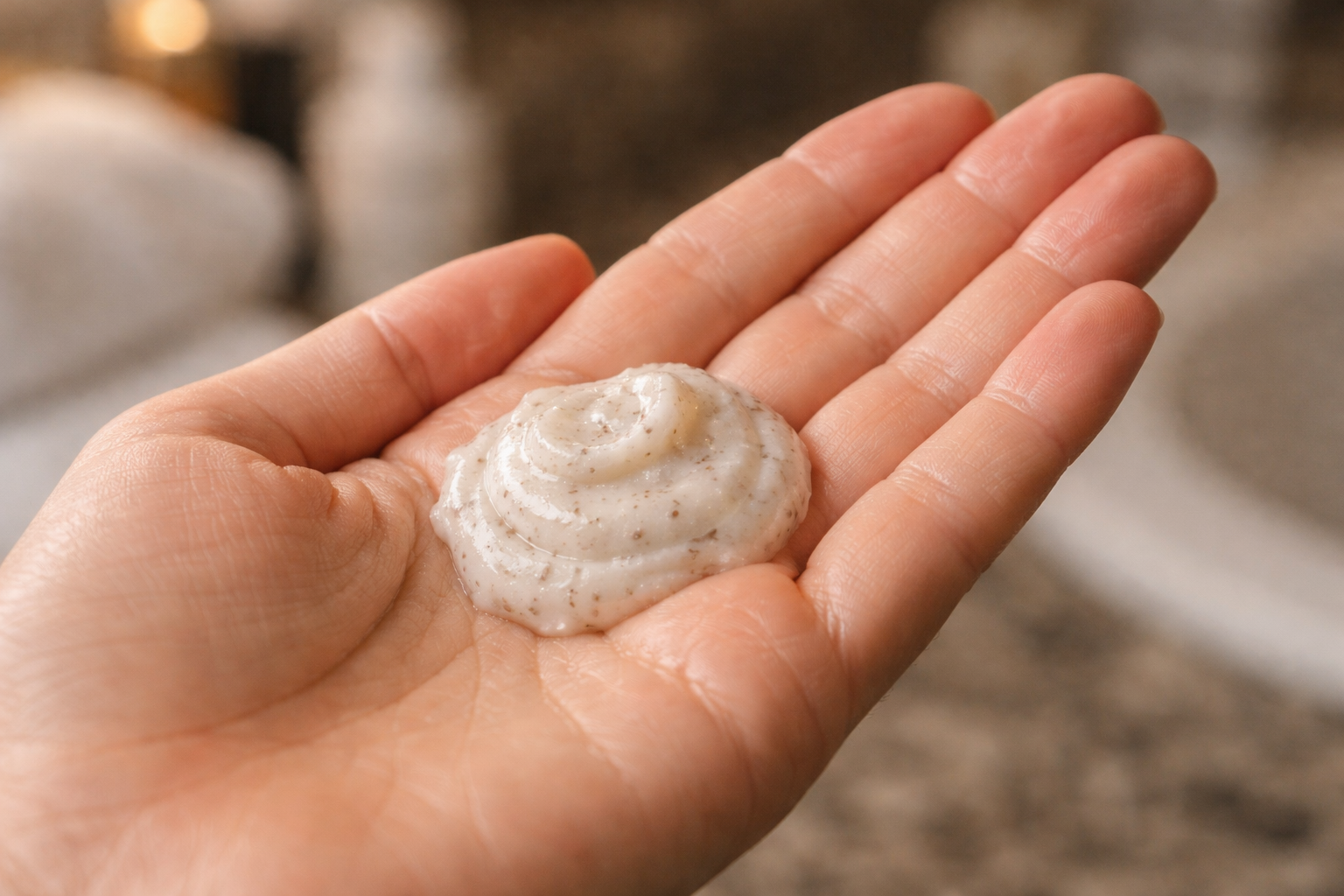
Exfoliation AHAs vs. BHAs
AHAs and BHAs both exfoliate, but they do completely different things. Here's how to figure out which one your skin needs (and how not to wreck your barrier in the process).
Introduction
Exfoliating acids are everywhere in skincare now — AHAs, BHAs, glycolic, lactic, salicylic. They all promise smoother, brighter, clearer skin. And they can deliver on that. But only if you're using the right one for your skin and not overdoing it.
AHAs and BHAs aren't interchangeable. They work in different ways and target different concerns. Using the wrong one won't help — and using too much of either one will wreck your barrier.
What AHAs Do
AHAs (alpha hydroxy acids) are water-soluble acids that work on the surface of your skin. They break down the bonds between dead skin cells so they slough off more easily, revealing fresher skin underneath.
Common AHAs include glycolic acid (derived from sugar cane), lactic acid (from milk), mandelic acid (from almonds), and citric acid (from citrus). They're effective for improving texture, fading dark spots, and making dull skin look brighter.
They also help with fine lines and sun damage by promoting collagen production. If you have dry, flaky, or aging skin, AHAs are usually a better choice than BHAs.
What BHAs Do
BHAs (beta hydroxy acids) are oil-soluble, which means they can penetrate into your pores and dissolve the oil and debris clogging them. The most common BHA is salicylic acid.
BHAs are anti-inflammatory and antibacterial, which is why they're so effective for acne. They clear out blackheads, reduce breakouts, and prevent new congestion from forming.
If you have oily, acne-prone skin or struggle with clogged pores, BHAs are usually your best bet.
AHAs vs. BHAs: Which One Is Right for You?
It depends on your skin type and what you're trying to fix.
Use AHAs if you have dry skin, dull or uneven tone, sun damage, or fine lines. They work on the surface to brighten and smooth.
Use BHAs if you have oily skin, acne, blackheads, or enlarged pores. They get inside your pores and clear out the gunk.
You can use both — some people alternate days or use one in the morning and one at night — but don't start with both at once. Introduce one, give your skin a few weeks to adjust, then add the other if you need it.
How to Exfoliate Without Damaging Your Skin
The biggest mistake people make with exfoliating acids is using them too much. Every day. Sometimes multiple times a day. Layered with retinol and vitamin C and three other actives.
Your skin doesn't need that. Start with once or twice a week. If your skin handles it well after a few weeks, you can increase to every other day. But most people don't need daily exfoliation.
Always wear sunscreen the next day — exfoliating acids make your skin more sun-sensitive. And if you're using retinol, be strategic about when you use acids. Layering too many actives at once is how you end up with a wrecked barrier.
Signs You're Overdoing It
If your skin is red, tight, stinging, or breaking out more than usual, you're probably exfoliating too much. Back off. Strip your routine down to basics — gentle cleanser, simple moisturizer, sunscreen — and let your barrier heal.
Exfoliation is helpful, but only when your barrier is intact. If it's not, you're just making things worse.
Bottom Line
AHAs and BHAs are both effective exfoliants, but they target different concerns. AHAs work on the surface for brightness and texture. BHAs get into pores for oil control and acne.
Figure out what your skin needs, start slow, and don't overdo it. Exfoliation works best when used strategically, not aggressively.
More to read
Salicylic Acid: The Breakout-Fighting BHA That Actually Works
Salicylic acid gets deep into pores and actually clears them out. But most people use it way too aggressively and wonder why their skin freaks out.

Skin Cycling: The Routine Strategy That Actually Makes Sense
Skin cycling is a structured way to use actives without wrecking your barrier. Here's how it works and why it's better than using everything every night.
Purging vs. Breaking Out: How To Tell The Difference
Your skin is breaking out after starting a new product. Is it purging or is the product making things worse? Here's how to tell.
Hyaluronic Acid: The Ingredient That’s Only as Good as Your Routine
Hyaluronic acid is in everything, and everyone swears by it. But if you're using it on dry skin in a dry climate without sealing it in, it might actually be making things worse.